Parental Alienation: Signs, Tactics, and How to Recover

Few experiences are as devastating as watching your child slowly turn against you – not because of anything you did, but because of a calculated campaign waged by your ex-partner. This is the reality of parental alienation, a form of emotional abuse where one parent systematically undermines the child's relationship with the other parent.
If you're co-parenting with a gaslighter or narcissist, you may already be seeing the signs: your child repeating phrases they couldn't have come up with on their own, sudden coldness where there was once warmth, or a growing list of complaints that sound suspiciously like your ex's voice.
Understanding parental alienation tactics – and learning effective counter-strategies – is essential for protecting your bond with your child. This guide will help you recognize the warning signs, understand the psychology behind this behavior, and take actionable steps to preserve your relationship.
What Is Parental Alienation?
Parental alienation occurs when one parent engages in behaviors designed to damage or destroy the child's relationship with the other parent. It goes beyond normal post-divorce tensions or a child's natural loyalty struggles – it's a deliberate pattern of manipulation.
As Dr. Stephanie Sarkis explains in her book Gaslighting: Recognize Manipulative and Emotionally Abusive People – and Break Free, "Parental alienation, turning the children against a parent, is a common goal of gaslighters" (Kraus, 2016). This behavior is deeply connected to gaslighting – both involve distorting reality to control others.
Why do some parents do this? For gaslighters and narcissists, it's often about winning. Sarkis notes, "In a divorce, gaslighters may become obsessed with feeling that they 'won.' They will often get irrationally jealous when you start dating again. Remember, gaslighters don't see people as people but as possessions."
When a gaslighting ex feels "wronged," they may try to make your life difficult – and if children are involved, they become weapons in this campaign. The child's wellbeing becomes secondary to the alienator's need for control and victory.
The Alienator's Playbook: Common Parental Alienation Tactics
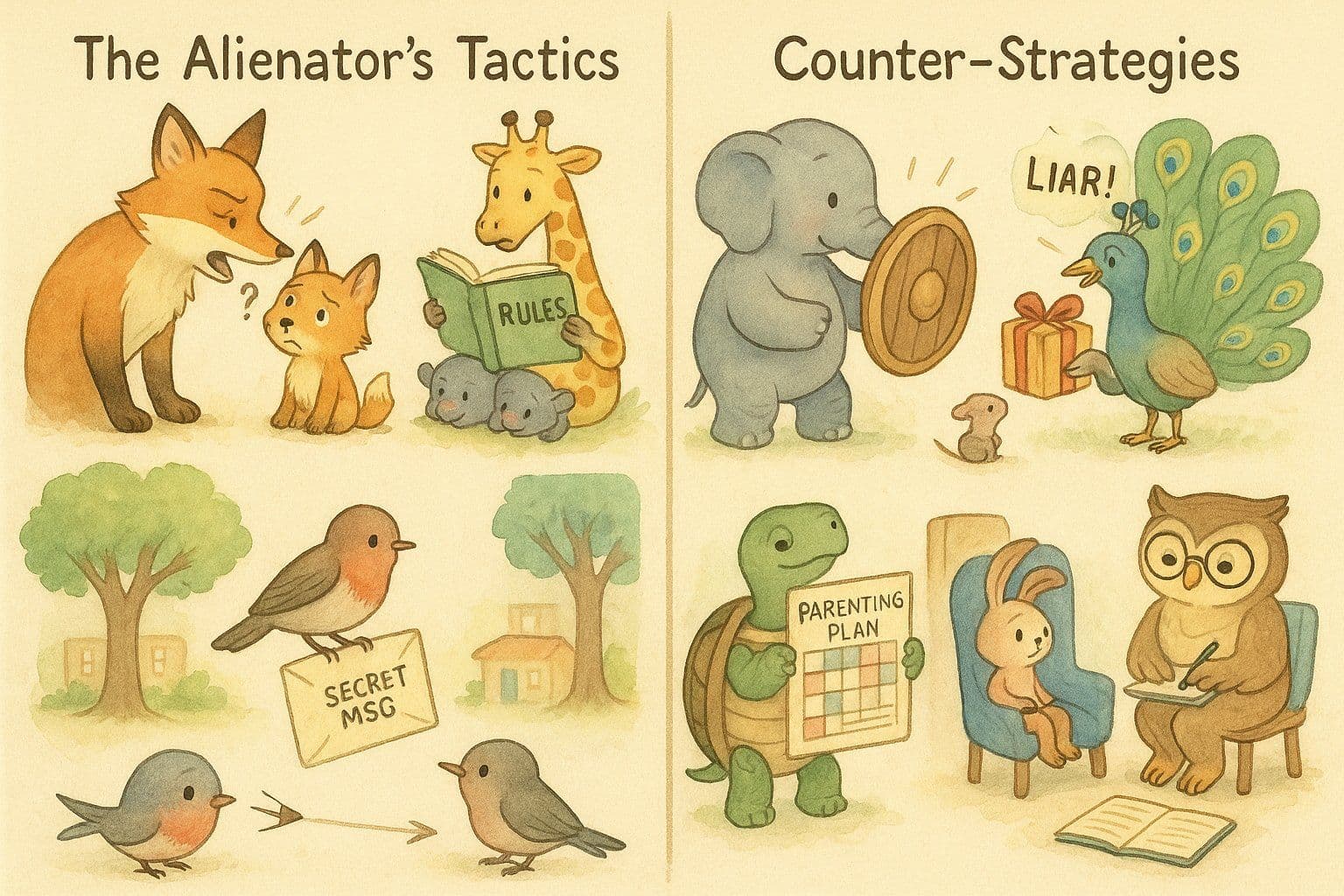
Understanding the tactics used in parental alienation is the first step toward countering them. Here are the most common strategies in the narcissist's playbook:
Badmouthing and False Narratives
The alienating parent consistently tells the child that the other parent is "bad," unworthy, or unloving. They may share inappropriate details about the relationship, exaggerate past conflicts, or fabricate stories entirely.
This constant negative messaging plants seeds of doubt in the child's mind. Over time, the child begins to adopt these views as their own, unable to distinguish the alienator's opinions from their own feelings.
Undermining Authority
The alienator portrays the targeted parent's household rules as "ridiculous," "overly strict," or "unfair." When children return from visits complaining about reasonable boundaries, you can be certain these complaints were encouraged – or even scripted.
This tactic serves a dual purpose: it makes the targeted parent seem unreasonable while positioning the alienator as the understanding, lenient "good" parent.
Creating a "Good vs. Bad" Parent Dynamic
Gaslighting parents often shower children with gifts, trips, and privileges while subtly (or not so subtly) positioning themselves as the "fun parent." Meanwhile, they characterize the other parent as boring, strict, or uncaring.
This dynamic exploits children's natural desire for approval and rewards. It also sets up an impossible situation for the targeted parent – if they try to match the gifts and permissiveness, they compromise their parenting; if they don't, they seem inferior by comparison.
Triangulation
The child is used as a messenger or spy, forced into the middle of adult conflicts. The alienator might pump the child for information about the other parent's life, new relationships, or finances.
This puts children in an agonizing position. They're forced to choose sides and may feel they're betraying one parent simply by loving the other. Triangulation is a classic manipulation tactic that causes significant psychological harm.
Name-Changing Tactics
Research by Warshak (2015) identified a subtle but powerful alienation tactic: having children refer to the targeted parent by their first name instead of "Mom" or "Dad." The alienator might also ask the targeted parent to call the children by different names than they use at home.
These tactics create emotional distance by dismantling the parent-child linguistic bond. When a child stops calling you "Mom" or "Dad," it signals a fundamental shift in how they perceive the relationship.
17 Warning Signs of Parental Alienation
Recognizing parental alienation early gives you the best chance of protecting your relationship. Watch for these warning signs:
- Sudden, unexplained hostility toward you after spending time with the other parent
- Repeating phrases or accusations that sound like adult language, not child language
- Black-and-white thinking about parents (one is all good, one is all bad)
- Refusing to spend time with you for vague or shifting reasons
- Showing no guilt about treating you badly
- Claiming their negative feelings are entirely their own (denying the other parent's influence)
- Extending hostility to your extended family and friends
- Reciting a rehearsed list of grievances when asked what's wrong
- Using the other parent's exact words to describe their complaints
- Knowledge of adult conflicts they shouldn't be aware of
- Sudden disinterest in activities you previously enjoyed together
- Acting as a messenger between parents
- Expressing fear of disappointing the alienating parent
- Refusing to display your gifts or photos at the other parent's home
- Changes in how they address you (first name instead of Mom/Dad)
- Exaggerated reactions to normal parenting (calling reasonable rules "abuse")
- Spying behavior or reporting back to the other parent
If you're seeing several of these signs, your child may be caught in a parental alienation campaign. The key distinction between normal divorce adjustment and alienation is the irrationality and intensity of the child's rejection – and evidence of the other parent's active involvement.
The Psychological Impact on Children and Targeted Parents
Parental alienation is now recognized as a form of emotional abuse that causes lasting harm to everyone involved – except the alienator, who achieves their goal of "winning."
Effects on Children
Children caught in parental alienation often experience:
- Identity confusion as they're forced to reject part of themselves
- Guilt and loyalty conflicts that cause chronic anxiety
- Difficulty trusting others in future relationships
- Problems with authority and boundary-setting
- Higher risk of depression and anxiety disorders
- Repetition of unhealthy relationship patterns as adults
As Sarkis warns, "This type of abuse can take years to heal from, and it can impact your child's relationship with you even into adulthood." Many adults who experienced parental alienation as children describe it as a fundamental loss – of a parent, of childhood security, and of their own ability to trust their perceptions.
Effects on Targeted Parents
For the parent being alienated, the experience can feel like a living nightmare:
- Grief for a relationship that's slipping away
- Helplessness against an invisible enemy
- Self-doubt (Am I really as bad as they say?)
- Financial strain from legal battles
- Social isolation as others misunderstand the situation
- Trauma responses including anxiety, depression, and PTSD symptoms
The experience mirrors other forms of gaslighting abuse – you know what's happening, but you feel powerless to stop it, and others may not believe you.
Counter-Strategies: Protecting Your Child and Yourself
While you cannot control the alienator's behavior, you can take strategic action to protect your relationship with your child. These counter-strategies, illustrated in the image below, provide a roadmap for navigating this painful situation.

Do Not Retaliate in Kind
This may be the hardest advice to follow, but it's also the most important. Do not badmouth the other parent to your child, no matter how tempting it becomes.
Why? First, it puts your child in an impossible position. Second, anything you say will likely be reported back and used against you. Third, you risk becoming the very thing you're fighting against.
Instead, when your child shares negative comments about you, respond calmly: "I hear that you're upset. I love you, and I'm always here to talk." Model the healthy behavior you want your child to learn.
Create a Detailed Parenting Plan
A specific, written agreement on holidays, school pickups, vacations, and exchanges reduces opportunities for conflict. The more detailed the plan, the fewer opportunities for the alienator to manipulate the situation.
Work with your attorney or a mediator to create a plan that includes:
- Exact pickup and drop-off times and locations
- Holiday schedules for years in advance
- Communication protocols between parents
- Decision-making processes for major issues
- Consequences for violations
Seek Counseling for Your Child
A skilled therapist can help your child:
- Process confusing emotions without pressure
- Develop critical thinking about manipulation
- Maintain healthy relationships with both parents
- Build resilience against gaslighting tactics
Look for a therapist experienced in high-conflict custody situations and parental alienation specifically. Family therapy can also provide a neutral space for rebuilding damaged relationships.
Document Everything
Keep detailed records of:
- Missed or shortened visitation
- Concerning statements your child makes (with dates and context)
- Communication with your ex (keep it written when possible)
- Witnesses to alienating behavior
- Changes in your child's behavior patterns
This documentation serves two purposes: it provides evidence for potential legal proceedings, and it helps you maintain clarity about what's actually happening when gaslighting makes you doubt yourself.
Stay Consistently Present
Even when your child rejects you, keep showing up. Attend their events. Send cards and messages. Call when you said you would. Rebuilding autonomy and trust happens through consistent, reliable presence.
Your child may not respond now, but they're watching. They'll remember who was always there, even when it was hard. Many adult survivors of parental alienation reconnect with their targeted parent once they're old enough to see the manipulation for what it was.
When to Seek Professional Help
Parental alienation situations often require professional intervention. Consider seeking help if:
- Your child refuses to see you entirely
- The alienation is escalating despite your best efforts
- You're experiencing symptoms of depression, anxiety, or trauma
- You need to document alienation for legal purposes
- Your child shows signs of significant emotional distress
Types of professionals who can help:
- Family therapists specializing in high-conflict custody
- Child psychologists trained in parental alienation
- Reunification therapists who work specifically to repair damaged parent-child relationships
- Family law attorneys experienced in alienation cases
- Parenting coordinators appointed by courts to reduce conflict
You may also benefit from support groups for targeted parents. Connecting with others who understand your experience can reduce isolation and provide practical strategies.
Frequently Asked Questions About Parental Alienation
What is parental alienation syndrome?
Parental Alienation Syndrome (PAS) is a term introduced by psychiatrist Richard Gardner in the 1980s to describe the constellation of symptoms appearing in children who have been alienated from one parent. While the term itself is controversial and not included in the DSM-5, the behaviors and patterns it describes are widely recognized by mental health professionals and family courts.
The core elements include: a campaign of denigration against the targeted parent, weak or frivolous rationalizations for the child's rejection, lack of ambivalence (seeing the alienating parent as all good and the targeted parent as all bad), and automatic support for the alienating parent in all conflicts.
How do you prove parental alienation in court?
Proving parental alienation requires comprehensive documentation and often expert testimony. Key evidence includes:
- Written communications showing the other parent's disparaging remarks
- Testimony from therapists, teachers, or others who have observed changes in your child
- Documentation of interference with your parenting time
- Records of your consistent efforts to maintain the relationship
- Expert psychological evaluations of your child and family dynamics
Courts increasingly recognize parental alienation, though proving it remains challenging. Work with an attorney experienced in these cases and consider requesting a custody evaluation by a psychologist trained in alienation dynamics.
Can parental alienation be reversed?
Yes, parental alienation can be reversed, though the process takes time, patience, and often professional intervention. Key factors for successful reversal include:
- Early intervention before alienation becomes severe
- Court-ordered therapy or reunification programs
- The targeted parent's consistent, loving presence
- As the child matures, developing their own critical thinking abilities
- Reduction in the alienating parent's influence through custody modifications
Many adults who were alienated as children eventually recognize the manipulation and seek to rebuild relationships with the targeted parent. Recovery is possible, though it may take years.
Is parental alienation considered child abuse?
Many mental health professionals and legal experts now consider parental alienation a form of psychological child abuse. According to the American Psychological Association, the child is being used as a weapon against their other parent, forced to reject someone they love, and taught manipulative patterns of relating.
Some jurisdictions explicitly recognize parental alienation as grounds for custody modification or other legal intervention. The psychological harm to children – including anxiety, depression, damaged ability to trust, and relationship difficulties – mirrors the effects of other forms of childhood emotional abuse.
What are the long-term effects of parental alienation on children?
Research shows that children subjected to parental alienation may experience lasting effects including:
- Relationship difficulties stemming from damaged attachment patterns
- Low self-esteem and identity confusion
- Higher rates of anxiety and depression
- Difficulty with authority figures and boundaries
- Tendency to repeat unhealthy relationship patterns
- Guilt and grief when they eventually recognize the alienation
- Estrangement from extended family on the alienated side
Adults who were alienated as children often describe feeling robbed of a parent and a part of their own history. Healing is possible but typically requires therapy and, when possible, reconciliation with the targeted parent.
Healing Is Possible
Parental alienation is one of the most painful experiences a parent can face. Watching your child be weaponized against you – manipulated into rejecting someone who loves them unconditionally – creates a grief unlike any other.
But healing is possible. Your consistent love, your steady presence, and your refusal to become what the alienator claims you are will matter. Children grow up. They develop their own critical thinking. Many eventually see through the manipulation and seek to reconnect.
In the meantime, focus on what you can control: documenting the situation, maintaining your own mental health, building your support network, and showing up for your child – even when they push you away.
If you're struggling with a co-parenting situation involving manipulation and gaslighting, you're not alone. Reach out to a family therapist, a support group, or a family law attorney who understands these dynamics. The path forward isn't easy, but you don't have to walk it alone.