
Gaslighting in Relationships: How It Erodes Self-Worth
Gaslighting is a form of emotional manipulation where someone distorts or denies your experiences, leaving you doubting yourself. It chips away at self-esteem, causing confusion, anxiety, and dependency on the manipulator. Common tactics include denying events, invalidating feelings, blame-shifting, and outright lying. Over time, these behaviors undermine confidence and create long-term emotional harm.
Key Takeaways:
- Victims often experience lower self-esteem, heightened anxiety, and depression.
- Gaslighting tactics include denial, invalidation, and blame-shifting.
- Long-term effects can include trust issues, isolation, and identity crises.
- Spotting early signs like self-doubt and behavioral changes is critical.
- Recovery involves recognizing manipulation, setting boundaries, and seeking support from therapists, friends, or tools like Gaslighting Check.
Protecting yourself starts with awareness, self-care, and seeking help. Rebuilding self-worth is possible with time and support.
::: @figure
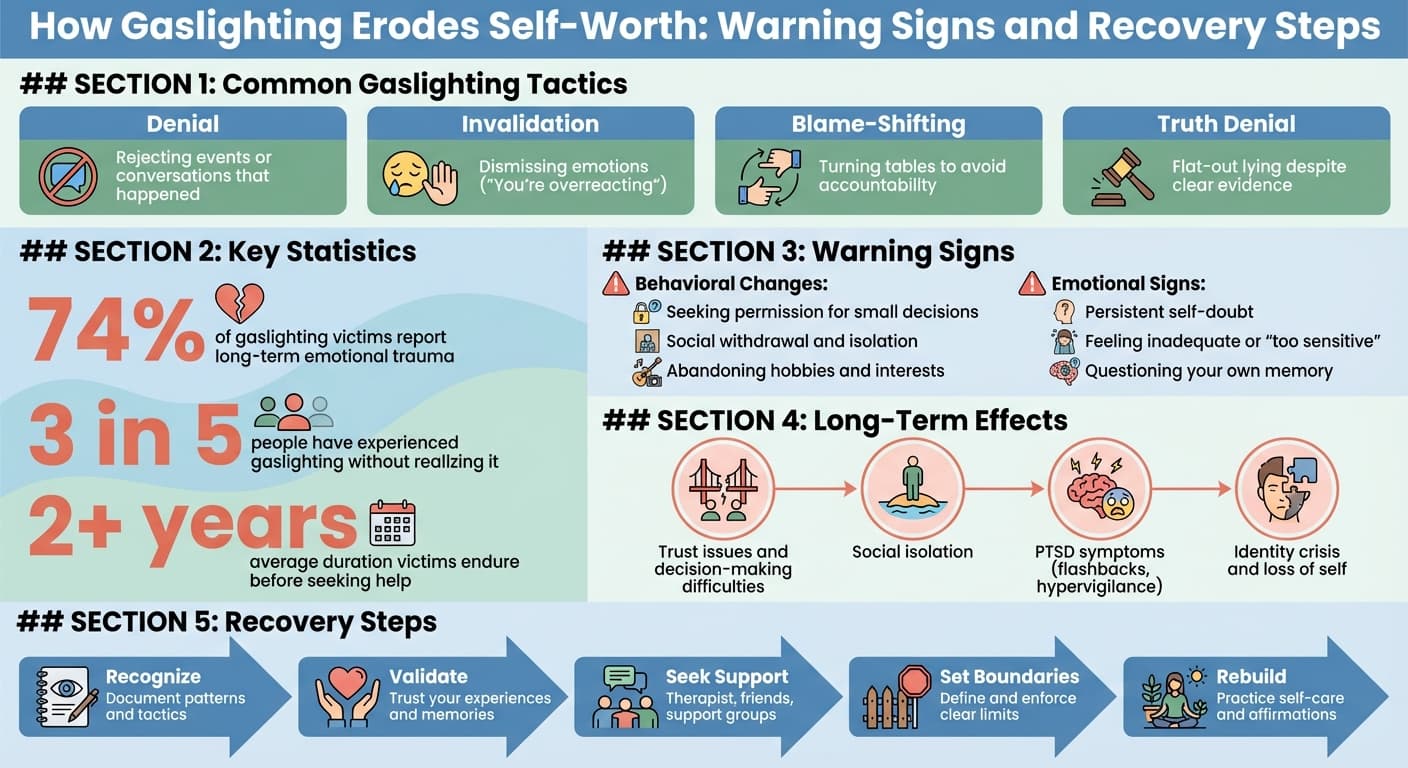
How manipulation, gaslighting, and emotional neglect can erode self-worth
How Gaslighting Destroys Self-Worth
Gaslighting slowly chips away at confidence and skews your sense of reality. Its subtle, persistent tactics can leave you doubting yourself and questioning your own memories. Understanding how gaslighters operate - and the harm they inflict - is key to identifying and resisting manipulation.
Common Manipulation Tactics
Gaslighters rely on specific strategies to distort your reality and undermine your self-assurance. One of the most common is denial: they outright reject events or conversations that you know happened, making you second-guess your memory.
Another tactic is invalidation, where they dismiss your emotions with phrases like, "You're overreacting" or "You're too sensitive." This makes you feel like your feelings are unjustified or even wrong.
They also use blame-shifting, turning the tables to avoid accountability. For example, they might say, "If you were more organized, I wouldn’t have to…" This approach shifts the focus from their behavior to your supposed shortcomings.
Lastly, there's truth denial - flat-out lying, even when presented with clear evidence. This tactic adds another layer of confusion, making it harder to trust your own perception of reality. Together, these methods create a fog of doubt and dependency on the gaslighter’s version of events [2][4][6].
These strategies are designed to destabilize your mental footing, setting the stage for deeper emotional harm.
Psychological and Emotional Effects
Gaslighting leaves victims feeling unmoored, as they grapple with the disconnect between their own memories and the gaslighter's contradictory claims [2]. This mental tug-of-war often leads to confusion and disorientation.
Over time, victims commonly experience heightened anxiety, worsening depression, and a diminished ability to make decisions. Studies using tools like the Rosenberg Self-Esteem Scale reveal that those subjected to frequent gaslighting often report significantly lower self-esteem. Many feel inadequate and lost, internalizing the abuser's demeaning messages [2][3].
Eventually, some victims may start accepting the gaslighter's narrative just to avoid the constant invalidation. This surrender is particularly dangerous - it sidelines your own reality in favor of maintaining a fragile peace [2][5][7].
Long-Term Effects on Victims
The scars of gaslighting often linger long after the relationship ends. One of the most pervasive effects is trust issues. Victims may struggle to make decisions without external reassurance or worry constantly that their memories are unreliable [3][7].
Another lasting impact is social isolation. Gaslighters often cut their victims off from friends and family during the relationship, and this withdrawal can persist, making it difficult to rebuild those connections. In severe cases, prolonged exposure to gaslighting can lead to post-traumatic stress disorder (PTSD), with symptoms like flashbacks, hypervigilance, and emotional numbness becoming part of daily life [2][3][8][9].
Perhaps the most profound consequence is an identity crisis. The steady erosion of self-worth can fundamentally reshape how victims see themselves. After months or even years of absorbing the message that their thoughts and feelings are flawed, regaining a sense of self becomes a daunting task. Research shows that about 74% of gaslighting victims report long-term emotional trauma, with many enduring these relationships for over two years before seeking help, allowing the damage to deepen [1].
Signs Your Self-Worth Is Being Damaged
Spotting the early signs of gaslighting can make all the difference in protecting your sense of self. Gaslighting doesn’t come with a warning label - it sneaks in through subtle shifts in how you think, feel, and behave. Often, these changes feel like personal shortcomings rather than the result of manipulation. But if you look closely, your actions and emotions may reveal that your self-worth is under attack.
Changes in Behavior
One of the most telling signs is a growing reliance on your partner for even the smallest decisions. You might catch yourself asking questions like, "Can I go out with my friends tonight?" or "Is it okay if I buy this?" Choices that once felt simple - like where to eat or what to wear - suddenly feel overwhelming, as self-doubt begins to creep in [2].
Another warning sign is pulling away from your social circle. Maybe you’re canceling plans more often, skipping family events, or avoiding conversations about your relationship with trusted friends. Gaslighters often make you feel like others don’t truly care about you or that you’re a burden. Over time, you might stop doing the things you once loved - dropping hobbies, skipping activities - all while believing these changes are entirely your own decisions, when in reality, they’re shaped by manipulation [3].
But it’s not just your actions that change. Your emotions and mental state can also reveal the toll gaslighting is taking.
Emotional and Mental Warning Signs
Manipulation techniques like denial and blame-shifting often lead to emotional turmoil. One major red flag is persistent self-doubt. If you’re constantly hearing things like "That never happened - you’re imagining it", you might start questioning your own memory and reality [2].
Feeling inadequate is another common experience. Being told you’re "too emotional", "paranoid", or "dramatic" can lead you to internalize these judgments. Over time, you might start believing that your pain is a sign of being overly sensitive, rather than recognizing the hurtful behavior for what it is [2].
Research shows a strong link between gaslighting and diminished self-esteem. Many people describe feeling "empty" or "like a shell", as they suppress their true thoughts and emotions to avoid conflict. Alarmingly, studies reveal that three in five people have experienced gaslighting without even realizing it at the time [1] [2].
Detect Manipulation in Conversations
Use AI-powered tools to analyze text and audio for gaslighting and manipulation patterns. Gain clarity, actionable insights, and support to navigate challenging relationships.
Start Analyzing NowSolutions: How to Break Free and Rebuild Self-Worth
Recognizing gaslighting is the first step toward reclaiming your sense of self and reality. You can start by validating your experiences through self-awareness, professional help, supportive relationships, and even technology.
How to Spot Gaslighting Tactics
Understanding how gaslighting works is crucial. It often takes the form of denying obvious facts ("That never happened"), belittling your emotions ("You're overreacting"), or dismissing concerns by labeling you as "too sensitive." These aren't one-off disagreements - they're deliberate strategies designed to make you question your perception of reality.
Keeping a log of interactions can help. Write down dates, conversations, and how you felt during those moments. Over time, reviewing these notes can reveal patterns. For example, in many U.S. relationships, gaslighting often surfaces during arguments about finances, chores, or social plans. A gaslighter might rewrite events or accuse you of being "crazy" or "forgetful" to control the narrative.
If you frequently find yourself doubting your memory, feeling confused after discussions, or apologizing when you’ve done nothing wrong, these could be warning signs. While someone who’s simply defensive might eventually acknowledge your feelings, a gaslighter will double down, mock, or shame you - even when presented with evidence. These consistent behaviors in your log can confirm the need for outside support.
Getting Professional and Social Support
Once you’ve identified the patterns, reaching out for support is essential. A licensed therapist experienced in emotional abuse and trauma recovery can be invaluable. Techniques like cognitive-behavioral therapy (CBT) can help challenge distorted beliefs, while trauma-focused approaches address anxiety and other lingering effects. Therapists can also guide you through reality-testing exercises, helping you compare your recollections with objective facts or third-party accounts. If the gaslighting is part of a larger abusive dynamic, they can assist with safety planning.
Your social circle is another critical resource. Trusted friends, family, or support groups can act as "reality checks" by validating your experiences and affirming your emotions. Hearing others share similar stories - such as being called "too sensitive" or having their memory questioned - can reassure you that you’re not alone and that the abuse wasn’t your fault. In the U.S., many communities offer accessible resources like domestic violence hotlines, shelters, and mental health centers. These organizations provide counseling, legal advice, and peer support, all of which are key to rebuilding your confidence and trust in yourself.
Using Technology to Detect Manipulation
When it’s hard to see manipulation clearly, technology can help. Tools like Gaslighting Check use AI to analyze text messages, calls, and audio for common manipulation tactics such as repeated denials, blame-shifting, or demeaning language. The tool highlights emotionally charged phrases and abrupt topic changes, offering clear reports that make it easier to identify patterns.
For those in the U.S. who suspect gaslighting, this kind of analysis can be a game-changer. By documenting recurring behaviors, the tool provides a record that’s helpful when discussing specifics with a therapist, trusted friend, or even when creating a safety plan for escalating situations. Gaslighting Check also prioritizes privacy, using encrypted storage and automatic deletion features to ensure sensitive information stays secure.
How to Prevent Gaslighting and Build Emotional Strength
Protecting yourself from gaslighting starts with awareness and intentional self-care. By recognizing the signs, setting firm boundaries, and prioritizing self-affirmation, you can safeguard your emotional well-being and rebuild your inner strength.
Learning About Gaslighting
The first step in countering gaslighting is understanding how it works. Watch for warning signs - phrases that dismiss your feelings or twist your reality are clear indicators of manipulation. Research suggests that individuals with insecure or anxious attachment styles are especially vulnerable to gaslighting, as they may be more inclined to blame themselves or fear rejection. By identifying your own attachment patterns, you can better recognize situations where you might be sacrificing your truth to avoid conflict.
To deepen your understanding, explore resources like books on emotional abuse, attend workshops with licensed therapists, or connect with domestic violence organizations. These can help you distinguish between healthy disagreements - where accountability exists on both sides - and coercive control, where one person manipulates reality to maintain power. Knowing these tactics equips you to set limits that should never be crossed.
Setting and Maintaining Boundaries
Once you’ve identified gaslighting behaviors, it’s essential to establish clear boundaries. Start by defining your limits in writing. For example: "No name-calling", "No mocking my feelings", or "No denying agreed-upon facts." Communicate these boundaries directly, such as saying, "I expect honest conversations without dismissing my experiences."
Boundaries are only effective if you enforce them. If someone repeatedly dismisses your feelings after being asked to stop, end the conversation calmly or take a step back. Keeping a written record of boundary violations - documenting dates, what was said, and how you responded - can help counter the self-doubt that gaslighting often creates. To maintain your independence, stay connected to friends, pursue hobbies, and manage your own finances if it’s safe to do so. These steps reduce isolation, a common tactic used to increase dependency on the manipulator.
Firm boundaries help rebuild self-trust, creating a foundation for meaningful self-care.
Building Self-Confidence Through Self-Care
Reclaiming your confidence starts with small, everyday choices - deciding what to wear, what to eat, or how to spend your time. These simple decisions reinforce your ability to trust yourself. Supporting your physical well-being with regular sleep, balanced meals, exercise, and time outdoors can also help soothe a nervous system that’s been overstimulated by manipulation.
Creative outlets like journaling, painting, or playing music can further help you rediscover your voice, separate from the narrative imposed by the gaslighter. Pair these activities with affirmations that challenge gaslighting messages. Statements like "My feelings are valid", "I trust my memory", and "Disagreement doesn’t make me irrational" can help rebuild your confidence. Reflecting on personal achievements - whether in work, relationships, or life decisions - reminds you of your capability and resilience.
Working with a therapist experienced in trauma or emotional abuse can provide additional support. They can help you process your experiences, identify vulnerabilities, and create a personalized safety plan. Reconnecting with respectful, supportive people reinforces your self-worth and counters the distorted beliefs gaslighting fosters.
Tools like Gaslighting Check can also be helpful. This app analyzes conversations for manipulation tactics, such as blame-shifting or denial, and offers objective insights to validate your experiences. When someone claims, "That never happened", having documented proof can help you trust your reality again. With features like encrypted storage and automatic deletion, your data stays secure as you work to rebuild your confidence and sense of self.
Conclusion: Taking Back Your Self-Worth
Gaslighting chips away at your sense of self by twisting reality and making you question your own judgment. As mentioned earlier, research highlights a strong negative link between experiencing gaslighting and self-esteem [2]. Recognizing this harmful pattern is a game-changer. It shifts your perspective from asking, "What's wrong with me?" to understanding, "This is manipulation." That realization is the foundation for healing and rebuilding trust in yourself.
Once you see the manipulation for what it is, you can start taking practical steps to regain control. Start by documenting confusing conversations - write down what was said and how it made you feel. Share your experiences with someone you trust, like a close friend, a therapist, or even a domestic violence hotline. Tools like Gaslighting Check can also help you identify patterns and safely record behaviors, which can be invaluable if you decide to share your story with professionals.
Remember, you don’t have to tackle everything at once. Each small step - whether it’s seeking clarity, setting boundaries, or reaching out for support - brings you closer to reclaiming your self-worth. Whether you’re still in the relationship or navigating its aftermath, know that the damage can be repaired. With validation, supportive connections, and time, survivors can rebuild confidence in their own perceptions, make decisions with clarity, and reconnect with their core values.
You are not broken. You are not "too sensitive." Your feelings matter, your memories are valid, and reclaiming your self-worth is a journey you can take one step at a time.
FAQs
How can I recognize if I'm being gaslighted in my relationship?
Gaslighting often creeps in quietly, making it hard to spot at first. Common signs include second-guessing your own memories, feeling like you're being overly emotional or irrational, and being blamed for things that clearly aren't your fault. Another red flag is when your feelings are dismissed or invalidated. You might also catch your partner denying things they’ve said or done - even when you’re absolutely sure of the events.
These patterns can chip away at your confidence, so it’s important to trust your instincts. Recognizing this kind of emotional manipulation is a crucial step in protecting your sense of self and taking action.
How can I rebuild my self-worth after being gaslighted in a relationship?
Recovering your sense of self-worth after enduring gaslighting is a journey that requires patience and deliberate action. The first step is to acknowledge the manipulation for what it was and remind yourself that you were not to blame for what happened. It’s crucial to connect with people who genuinely support and validate you, as they can help ground you and reinforce your perception of reality.
Take time to prioritize self-care activities that promote your mental and emotional health. Whether it’s journaling, practicing mindfulness, or diving into hobbies that make you happy, these practices can help you reconnect with yourself. Establishing healthy boundaries is another key step - this helps protect you from further harm and empowers you to take back control of your life. If you feel overwhelmed, don’t hesitate to seek help from a therapist or counselor who can offer guidance and support as you heal.
Why do gaslighters deny reality and shift blame in relationships?
Gaslighters rely on tactics like denial and shifting blame to manipulate and dominate their partners. These behaviors are aimed at making the victim second-guess their own thoughts, memories, and perceptions, leaving them in a constant state of confusion.
By dodging accountability and distorting the truth, gaslighters maintain control in the relationship. This manipulation not only undermines the victim’s confidence but also chips away at their self-esteem and sense of identity, making it harder for them to see the abuse for what it truly is.