
Psychological Safety in Feedback Delivery
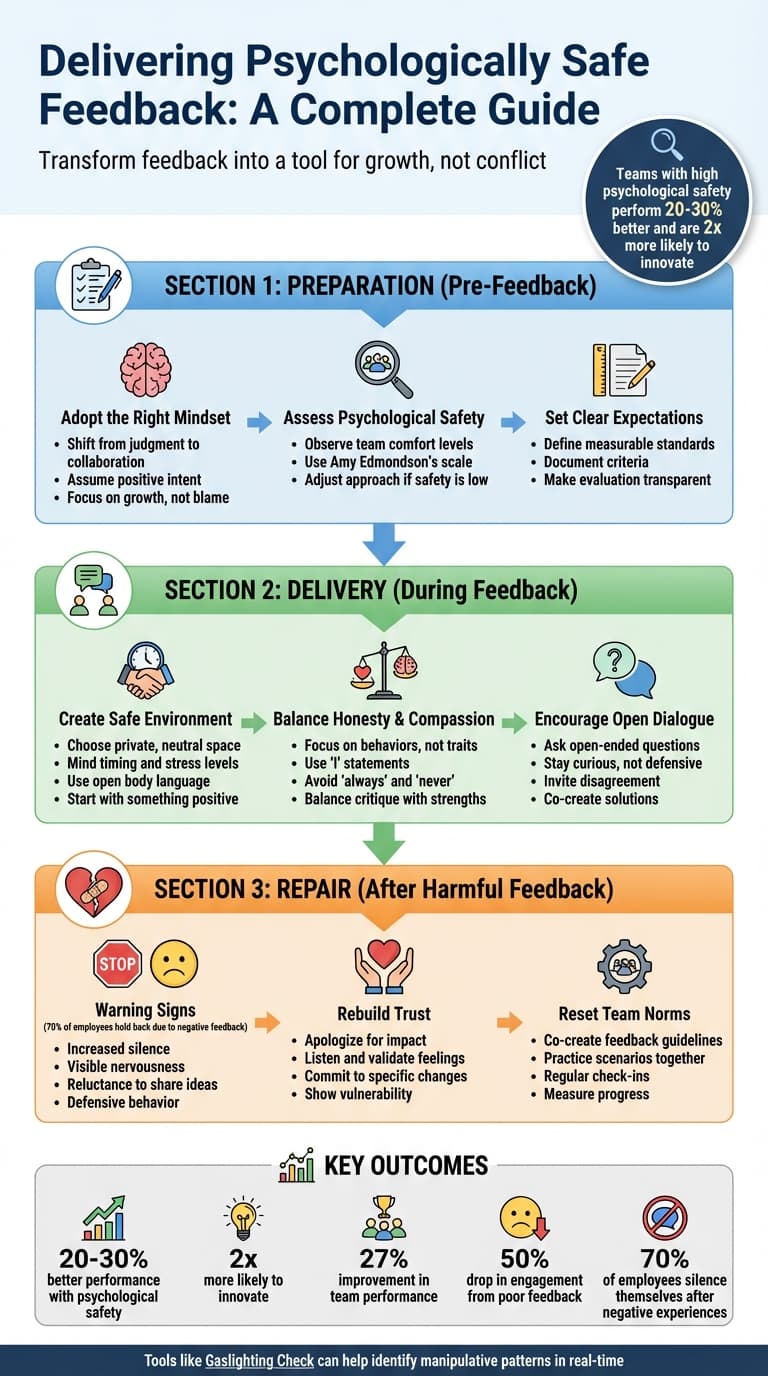
Psychological safety is the key to turning feedback into an opportunity for improvement rather than a source of stress. It ensures that team members can express themselves openly without fear of judgment, especially in situations with power imbalances. Here's what you need to know:
- Why Feedback Feels Risky: In hierarchical relationships, fear of consequences often silences honest communication. This is worsened by tactics like gaslighting, which distort reality and erode trust.
- Benefits of Psychological Safety: Teams with high psychological safety perform 20–30% better and are twice as likely to innovate. Open dialogue thrives when risks of ridicule or punishment are removed.
- How to Improve Feedback:
- Focus on behaviors, not personal traits.
- Use "I" statements to reduce defensiveness.
- Balance critique with recognition of strengths.
- Encourage open dialogue by inviting questions and disagreements.
- Repairing Damage: If feedback harms trust, acknowledge the impact, apologize, and commit to behavior-focused discussions. Rebuilding trust is possible with consistent effort.
- Tools to Help: AI tools like Gaslighting Check can identify manipulative patterns in feedback, offering real-time suggestions to maintain a safe environment.
The goal is to create a space where feedback promotes growth and collaboration. By prioritizing safety, feedback becomes a tool for learning - not conflict.
::: @figure
Feedback and Psychological Safety
Preparing to Deliver Feedback Safely
Practical preparation is key to ensuring feedback remains constructive, especially in situations where power dynamics might create tension.
Adopting the Right Mindset
The way you approach feedback significantly influences how it’s received. Shift your focus from judgment to collaboration - think of the conversation as a shared effort to solve a problem. This means starting with positive intent, like saying, "I know you were trying to help the client, but here’s how it impacted the team’s timeline." Acknowledge that you might not have all the facts by adding, "I’d like to understand how this looked from your perspective." Make it clear that your goal is improvement, not blame.
Keep your objective front and center: to help the individual grow while strengthening your relationship. Stay open to learning what you might not know, and take a moment to manage your emotions before the conversation. Framing feedback as a shared learning opportunity - like saying, *"Let’s review what happened and figure out how we can improve together" - *can ease feelings of defensiveness, especially in situations where power dynamics are at play.
Assessing Current Psychological Safety
After adopting the right mindset, take stock of your team’s psychological safety. This involves observing how comfortable team members are in everyday interactions. Do they openly ask for help or admit mistakes without deflecting? Are they willing to challenge ideas, even from leadership, or does the group tend to agree quickly without much discussion? Signs like prolonged silence during meetings, avoiding eye contact, or offering only surface-level affirmations may indicate low psychological safety.
For a more structured approach, you can use Amy Edmondson's Psychological Safety Scale. Ask team members to rate statements like, "If you make a mistake on this team, it is often held against you" or "It is safe to take a risk on this team," using a scale from strongly disagree to strongly agree. Informal one-on-one conversations can also be insightful. Questions like, "Is there anything you’ve been hesitant to bring up?" or "When do you feel least comfortable speaking up?" can uncover underlying issues. If you find that psychological safety is low, consider adjusting your approach to feedback. Start with smaller, positive interactions to rebuild trust before tackling more sensitive topics.
Setting Clear Expectations
Uncertainty can create anxiety, especially when people don’t know how their performance is being measured. To address this, establish clear, measurable standards in advance. Define what "meets expectations" looks like using specific criteria like timelines, quality benchmarks, or customer feedback. Document these standards in accessible formats, such as performance plans or dashboards, and revisit them regularly in one-on-one meetings. This ensures that feedback becomes part of an ongoing conversation, rather than feeling like an unexpected critique.
At the beginning of a feedback session, be upfront about the purpose and structure of the conversation. For instance, you might say, "I’d like to spend the next 20 minutes reviewing the last client project - what went well, what could improve, and how we can set you up for success moving forward." Clearly explain how decisions are made and what evaluation criteria are being used. This keeps the focus on established standards rather than subjective opinions. Stick to discussing specific behaviors and outcomes - for example, saying, "When deadlines are missed without notice, it impacts our overall timeline," instead of making personal remarks. Invite collaboration by asking, "What support do you need to meet this standard?" This reinforces the idea that feedback is about growth and improvement, not personal criticism.
Delivering Feedback While Maintaining Psychological Safety
When it’s time to deliver feedback, how you approach the conversation can either build trust or cause lasting harm - especially in situations where there’s a power imbalance.
Creating a Safe Feedback Environment
The setting plays a big role in how feedback is received. Choose a private and neutral space, and be mindful of timing. Avoid giving feedback when someone is stressed, overwhelmed, or racing to meet a deadline. Before diving in, ask yourself: Is this the right time? Is the location appropriate? Am I the best person to share this feedback?
Your body language also matters. Simple gestures like maintaining eye contact, keeping your arms uncrossed, and nodding as you listen can signal openness and safety. Starting with something positive can set a collaborative tone. For example, saying, "I really appreciated how you handled the client's concerns last week", creates a foundation for constructive dialogue.
Active listening is key. Let the other person speak without interruptions, ask clarifying questions like, "Can you walk me through what was happening on your end?" and acknowledge their feelings with phrases such as, "I understand why that situation felt overwhelming."
Show vulnerability by inviting feedback on your own actions. For instance, saying, "I’d love to hear how I can better support you", shows openness and reduces the tension that often comes with power dynamics.
These steps build on trust and openness, creating an environment where directness can coexist with compassion.
Balancing Honesty and Compassion
Focus on specific, observable behaviors rather than making it about personal traits. For example, instead of saying, "You’re disorganized", try, "I noticed the last three reports were submitted late, which delayed our team’s progress." This keeps the conversation fact-based and avoids personal criticism.
Using "I" statements can help convey the impact of an issue without triggering defensiveness. For instance, "I felt concerned when the deadline was missed because it affected our client relationship", is more effective than saying, "You always miss deadlines." Avoid words like "always" or "never", which can make someone feel attacked.
Balance criticism with recognition of strengths. For example, "Your attention to detail in client communications is excellent. Let’s work on making sure tasks are completed on time." A helpful framework for feedback is to address three questions: What should stop? What should start? What should continue? This keeps the discussion practical and forward-focused.
Assume positive intent before jumping to conclusions. Ask yourself, "What else could be going on here?" For instance, someone missing deadlines might be struggling with unclear priorities or lack of resources, rather than simply being unmotivated. End the conversation by thanking them for their time and openness, reinforcing respect even during tough discussions.
Encouraging Open Dialogue
Feedback should feel like a conversation, not a lecture. Create space for questions, disagreements, and collaborative problem-solving by asking open-ended questions like, "What are your thoughts on this?" or "How can we work through this together?"
If disagreements come up, stay curious rather than defensive. If someone challenges your perspective, respond with questions like, "Can you tell me more about that?" or "What am I missing here?" Reflecting back what you’ve heard - such as, "So you’re saying the timeline felt unrealistic from the start, is that correct?" - can help ensure clarity and mutual understanding.
Encourage disagreement, particularly in situations where someone might feel hesitant to speak up. You could say, "If you see this differently, I’d really like to hear your perspective - it helps us make better decisions." Finally, wrap things up by working together to address any challenges. Define clear next steps, set timelines, and identify resources to ensure the conversation ends with a shared plan for improvement rather than just a list of issues.
Keeping the dialogue open ensures feedback becomes a tool for growth rather than a source of conflict.
Detect Manipulation in Conversations
Use AI-powered tools to analyze text and audio for gaslighting and manipulation patterns. Gain clarity, actionable insights, and support to navigate challenging relationships.
Start Analyzing NowRepairing Psychological Safety After Harmful Feedback
Feedback, even when well-intentioned, can sometimes harm psychological safety - especially in situations where power dynamics come into play. When this happens, it's crucial to recognize the damage and take intentional steps to mend it. The effects of such harm often show up in noticeable changes in team behavior.
Signs of Damaged Psychological Safety
There are clear warning signs when psychological safety takes a hit. You might notice a once-active team member growing silent during meetings. Nervousness becomes more visible - fidgeting, avoiding eye contact, or other anxious behaviors can surface after feedback that feels overly harsh or personal. A reluctance to share ideas or ask for help may signal that someone now fears judgment or embarrassment[2][3][4].
Research reveals that 70% of employees hold back from speaking up due to fears tied to negative feedback experiences[4]. This silence can be costly. Teams that rank high in psychological safety are five times more likely to perform well, while poor feedback can slash engagement by as much as 50%[3][4]. Additionally, when team members become defensive or resist change without open conversations, it’s often a sign that trust has been broken[2][5].
Steps to Rebuild Trust
If feedback has caused harm, repairing trust requires swift and thoughtful action. Start by apologizing for the impact of your words, not just your intent. For example, instead of saying, "I didn’t mean to upset you", try, "I see my feedback caused distress, and I’m sorry for that." Acknowledging the harm shows accountability. Follow this by actively listening and validating their feelings with statements like, "I understand why that felt overwhelming."
Commit to specific changes in how you deliver feedback moving forward. If your previous approach felt personal, assure the individual that future feedback will focus strictly on observable behaviors. For instance, you might say, "Let’s make sure we focus on actions, not personality, in the future." Show vulnerability by inviting feedback on your own approach: "What could I do differently next time?" Reiterate key points from the conversation to confirm mutual understanding, and offer ongoing support as needed.
In cases where feedback crosses into manipulation - whether intentional or not - 74% of individuals report long-term emotional consequences[1]. Rebuilding trust in these situations requires acknowledging the harm and helping the person regain confidence in their own perceptions. With time and consistent effort, trust can be restored, allowing feedback to once again serve its intended purpose.
Resetting Team Norms Around Feedback
After trust begins to heal, it’s vital to establish new norms for giving and receiving feedback. Consider hosting a team session to co-create guidelines. Ask questions like, "What do you need to feel safe during feedback conversations?" or "How can we ensure everyone’s voice is heard?" Use this discussion to define standards such as focusing on behaviors (not personalities), using "I" statements, and avoiding blanket terms like "always" or "never."
Introduce clear conflict resolution processes so everyone knows how to handle disagreements constructively. Practice feedback scenarios as a team or review real conversations afterward to refine skills and reinforce respectful communication. Prioritizing psychological safety as a team goal can lead to tangible benefits - teams with high psychological safety see up to 27% improvements in performance and innovation[6][7].
Finally, make it a habit to reassess progress. Tools like Amy Edmondson’s psychological safety scale can help measure how comfortable team members feel about asking for help or speaking up[4]. Regular check-ins ensure that any lingering issues are addressed before they grow into larger problems.
Using Technology to Detect and Prevent Manipulative Feedback
Using AI to Improve Feedback Conversations
AI-powered tools have become a practical solution for identifying manipulation during feedback sessions, particularly in situations where power dynamics make it difficult for individuals to speak up. These tools analyze conversations to identify red flags, such as invalidation, blame-shifting, or contradictory statements that can distort the truth. By examining text for shifts in sentiment or repetitive denial phrases, AI can highlight problematic patterns that might otherwise go unnoticed.
In real-time, these technologies can provide immediate alerts when manipulative language is detected. For example, during a performance review, an AI system might flag a manager's comment like, "Your concerns aren't valid here", and suggest a more empathetic alternative such as, "I understand your perspective; let's focus on the task outcome." This instant feedback gives leaders a chance to pause, reevaluate their approach, and foster the kind of openness that psychological safety requires. Additionally, voice analysis can pick up on non-verbal cues - like sarcasm or changes in pitch - that may signal emotional distress. These insights pave the way for tools like Gaslighting Check, which further enhance efforts to maintain a psychologically safe environment.
How Gaslighting Check Supports Psychological Safety

Gaslighting Check builds on earlier methods of identifying manipulative feedback by using real-time analysis of audio, text, and voice to document harmful tactics. The platform creates detailed reports that highlight behaviors like denial, reality distortion, and blame-shifting - patterns that can erode trust, especially in relationships where power is unevenly distributed. For instance, if a manager's critique subtly invalidates an employee's accomplishments, the tool records this behavior, giving the recipient clear evidence to recognize the issue and initiate an honest conversation.
To address privacy concerns, Gaslighting Check employs end-to-end encryption and automatic data deletion, ensuring sensitive workplace conversations remain confidential. This privacy-focused design reassures organizations while helping them navigate the complexities of feedback dynamics effectively.
Conclusion and Key Takeaways
The Role of Psychological Safety
Psychological safety turns feedback into a tool for growth. In U.S. workplaces, where performance reviews often influence pay and career progress, creating a safe feedback environment is essential for keeping employees engaged and motivated. The shift happens when feedback focuses on the quality of work rather than personal traits, fostering a space where learning takes priority over assigning blame.
How to Deliver Feedback Safely
Start by making it clear that your feedback is meant to help, not criticize. Before the conversation, take time to clarify your purpose, manage your emotions, and prepare specific, behavior-focused examples. During the discussion, address the work itself while showing genuine care for the person’s success. Invite their input with open-ended questions like, “How does this resonate with you?” or “Is there something I might be overlooking?” End the conversation by summarizing key points and agreeing on next steps, ensuring everyone leaves feeling valued and informed. Building psychological safety is a gradual process that requires consistency - be open about your own mistakes, regularly check how safe people feel to speak up, and make adjustments based on their feedback.
As feedback practices improve, technology can provide additional support.
Leveraging Tools for Emotional Awareness
Technology can play a crucial role in fostering ethical leadership by analyzing the language, tone, and patterns in feedback conversations. This is particularly useful in situations with power imbalances, helping to flag manipulative behaviors before they take root. Tools like Gaslighting Check assist managers by reviewing feedback patterns to protect employees from repeated invalidation. Through real-time analysis of audio, text, and voice, the platform helps users identify when feedback crosses the line from constructive to harmful, pointing out tactics like denial, reality distortion, and blame-shifting that damage trust. For just $9.99 per month, premium features include detailed reports and conversation tracking, offering an affordable way to bring objective insights into subjective interactions. These tools complement clear policies, ongoing training, and thoughtful human judgment, creating a more trustworthy feedback culture.
FAQs
How does psychological safety drive innovation within teams?
Psychological safety fuels innovation by fostering an environment where team members feel at ease sharing ideas, taking risks, and expressing concerns without the fear of judgment or backlash. When individuals trust that their contributions will be respected and appreciated, they become more inclined to offer new perspectives and work together seamlessly.
This atmosphere of trust and openness paves the way for creativity, experimentation, and effective problem-solving - all crucial ingredients for crafting new solutions and driving consistent growth within a team.
How can I rebuild trust after giving feedback that caused harm?
Rebuilding trust after delivering feedback that hurt someone requires a thoughtful approach rooted in empathy and accountability. Begin by recognizing the impact your words had and offering a sincere apology. Be transparent about your intentions, making it clear that causing harm was never your goal.
From there, prioritize active listening to understand their perspective, honor their boundaries, and commit to consistent, respectful behavior moving forward. Remember, trust isn’t repaired overnight - it’s a process. Show through your actions that you genuinely value the relationship and are dedicated to fostering better communication.
How can Gaslighting Check promote psychological safety when giving feedback?
Gaslighting Check enhances psychological safety by examining conversations for signs of emotional manipulation and offering straightforward, unbiased insights. This allows users to gain a clearer understanding of their interactions, spot harmful patterns, and deliver feedback with greater confidence and precision.
By equipping individuals to recognize manipulation as it happens, Gaslighting Check contributes to fostering a more respectful and supportive atmosphere, even in scenarios where power dynamics are uneven. Its features promote honest communication and help preserve trust during feedback discussions.