How Real-Time Detection Tools Help Mental Health

How Real-Time Detection Tools Help Mental Health
Real-time detection tools are transforming how people identify and address gaslighting, a harmful form of psychological manipulation. These AI-powered tools analyze text, email, or voice interactions to flag behaviors like blame-shifting, reality distortion, or emotional invalidation. By providing immediate feedback and detailed reports, they help users recognize manipulation as it happens, reinforcing self-trust and enabling healthier boundaries.
For example, Gaslighting Check uses natural language processing, voice analysis, and behavioral pattern modeling to detect manipulative tactics. It offers features like real-time alerts, conversation history tracking, and encrypted data storage to ensure user safety. While not a replacement for therapy, these tools complement professional support by documenting patterns of abuse and aiding recovery.
Key takeaways:
- Gaslighting erodes confidence and can lead to anxiety, depression, or PTSD-like symptoms.
- AI tools like Gaslighting Check analyze conversations to identify manipulation in real time.
- Features include alerts, reports, and privacy-focused measures for safe use.
- Insights from these tools can support therapy and help establish boundaries.
Using these tools alongside professional guidance can be a step toward emotional recovery and regaining control over your mental health.
Understanding Gaslighting and Its Mental Health Impact
What is Gaslighting?
Gaslighting is a deliberate form of psychological manipulation where someone enforces their version of reality to control and undermine you. This isn’t just a misunderstanding or a difference of opinion - it's a calculated effort to make you question your memory, perception, and even your sanity. The manipulator’s goal? To erode your confidence and make you dependent on their narrative [3][5].
This tactic thrives in situations with an unequal power dynamic, such as romantic relationships, workplaces, or family hierarchies. It’s especially effective when you hold the manipulator in high regard or trust them deeply [5]. Gaslighting often manifests in specific behaviors, such as withholding, where the manipulator refuses to discuss issues or pretends not to understand your concerns [2][4]. Another common tactic is diverting, where they steer the conversation away from their actions to avoid accountability [2]. You might hear phrases like, "That never happened", "You're overreacting", or "You're too sensitive." These aren’t just dismissive comments - they’re calculated attempts to make you doubt your reality.
Recognizing these tactics is crucial because they lay the groundwork for the serious mental health consequences that follow.
Mental Health Effects of Gaslighting
Over time, these manipulative behaviors take a severe toll on mental well-being. Victims often experience chronic self-doubt, which can escalate into anxiety, depression, or even PTSD-like symptoms. Your mind becomes hypervigilant, constantly bracing for the next instance of manipulation.
This relentless stress impacts cognitive function, leading to mental "fog." You may struggle to focus, feel confused about your memories, or find it hard to complete everyday tasks. As your self-esteem crumbles, you might start to feel "crazy" or incapable. Social isolation often follows - either because the manipulator cuts you off from support systems or because you withdraw, overwhelmed by shame or uncertainty. Over time, you can become emotionally detached, lose sight of your goals, and feel unable to trust your own judgment. Tragically, many victims hesitate to seek help, believing they’re to blame or fearing that others won’t believe them.
Why Real-Time Detection Matters
Catching gaslighting in the moment can be a game-changer. When an AI tool flags manipulative language as it happens, it provides objective validation - proof that what you’re experiencing is real, not imagined. This immediate feedback interrupts the manipulation cycle before it spirals, giving you the chance to respond calmly or disengage entirely using strategies like the Gray Rock method.
Real-time detection tools also create a documented record of manipulative behaviors, such as reality distortion, blame-shifting, or emotional invalidation. These time-stamped records can be invaluable for therapy, legal cases, or simply reassuring yourself that your experiences are valid. By identifying gaslighting early, these tools help prevent the long-term psychological harm that often goes unnoticed. The ability to recognize manipulation in real time empowers you to protect your mental health and reclaim control before the damage becomes deeply ingrained.
How To Handle Gaslighting Like A Pro (By A Licensed Therapist)
How Real-Time Detection Tools Work
::: @figure
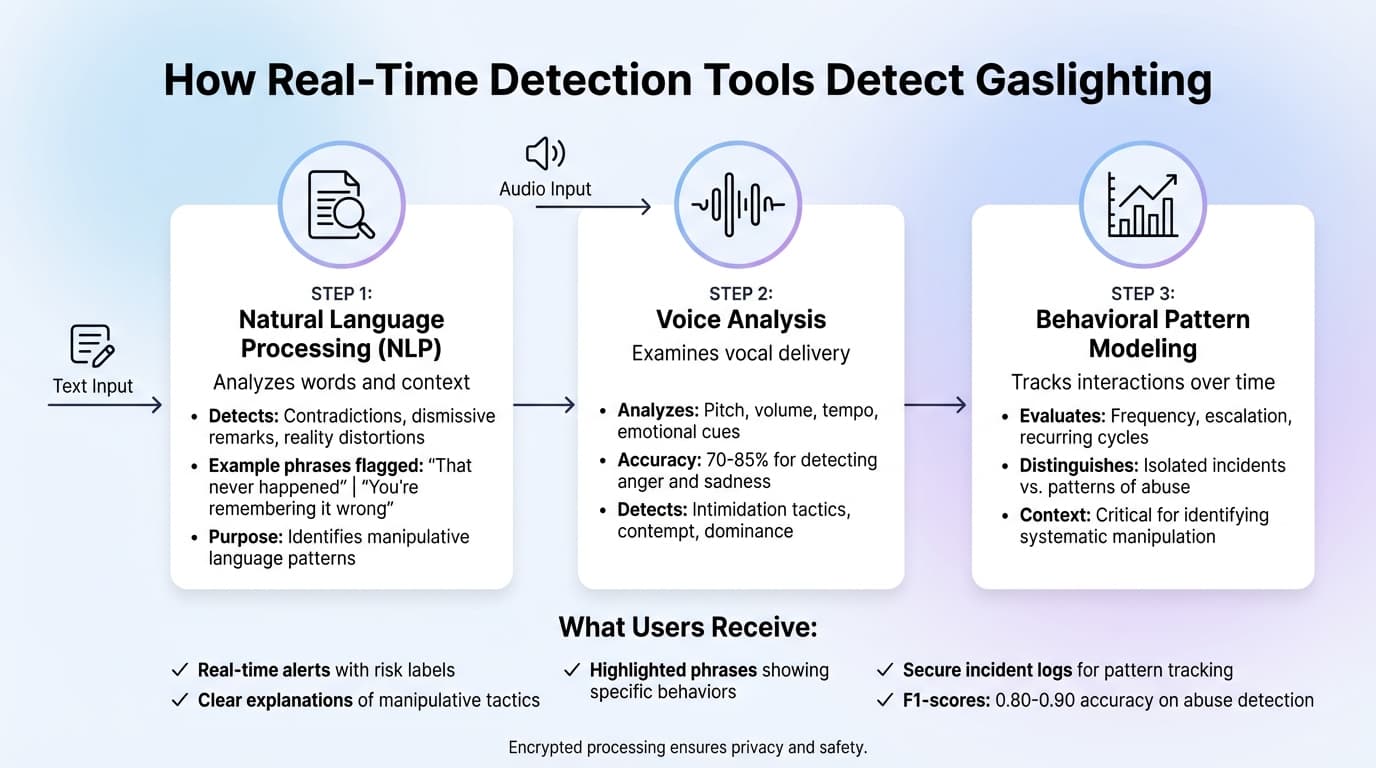
Technologies Behind Detection
To combat gaslighting in real-time, modern tools offer immediate, objective insights into manipulative interactions. These systems rely on three main technologies working in harmony. Natural language processing (NLP) examines the words and context of conversations to identify contradictions, dismissive remarks, or distortions of reality. Trained on datasets of abusive language, NLP can flag phrases like "that never happened" or "you're remembering it wrong", which are hallmarks of gaslighting aimed at undermining your perception.
Voice analysis focuses on how words are delivered. By examining factors like pitch, volume, and tempo, it can detect emotional cues such as anger, contempt, or dominance. Research shows that systems analyzing vocal features can classify emotions like anger and sadness with 70–85% accuracy. For example, a sudden increase in volume or a harsh tone during a seemingly neutral statement might reveal intimidation tactics that text analysis alone could miss.
Behavioral pattern modeling takes a broader view, tracking interactions over time to distinguish isolated incidents from patterns of abuse. This technology evaluates frequency, escalation, and recurring cycles of idealization and devaluation - key markers of abusive relationships. Studies confirm that context and conversation history are critical; a single comment might appear neutral but becomes abusive when seen within a pattern of repeated belittling or controlling behavior.
These technological pillars form the foundation for the practical features discussed below.
Key Features of Real-Time Detection Tools
These tools analyze conversations - whether through text, audio, or phone calls - to assess the risk of manipulation. Speech is transcribed into text, and both NLP and voice analysis models evaluate the content, assigning risk scores and providing insights. Users receive alerts, risk labels, and concise explanations, such as "frequent denial of your memory" or "blaming you for their actions." The system also securely logs incidents, enabling users to track patterns over time.
This emphasis on explainable AI is crucial for mental health support. Instead of vague risk scores, users get clear explanations and highlighted phrases that reveal specific manipulative tactics. Advanced deep learning models, which use contextual embeddings, achieve F1-scores between 0.80 and 0.90 on abuse detection benchmarks, demonstrating their reliability when trained effectively.
Many tools now integrate text and audio analysis for a more comprehensive approach, as tone and delivery can completely alter the meaning of words. Additionally, there's a shift toward on-device or encrypted processing, allowing these tools to operate locally on smartphones. This not only enhances privacy but also ensures the technology is practical for everyday use.
With these capabilities, tools like Gaslighting Check provide meaningful, real-time support for those facing emotional manipulation.
Gaslighting Check: A Practical Solution

Gaslighting Check combines these advanced technologies into a single tool designed to help users break free from emotional manipulation. It offers real-time audio recording to capture conversations as they happen, along with text and voice analysis to assess both what is said and how it’s delivered. The platform generates detailed reports that highlight specific manipulative tactics and includes a conversation history tracker to identify patterns over time.
To prioritize safety, Gaslighting Check uses encryption and automatic deletion protocols to protect user data. This is especially important, as a U.S. survey revealed that 71% of domestic violence program staff reported abusers often monitor survivors’ devices, messages, and calls. By safeguarding user privacy, the tool minimizes risks for those in unsafe situations.
Gaslighting Check is designed to be both effective and affordable, ensuring accessibility for those in need. Emotional abuse, including gaslighting, has been linked to post-traumatic stress symptoms, depression, and anxiety - sometimes at levels more severe than physical abuse, according to a 2020 meta-analysis. This underscores the importance of tools like Gaslighting Check in providing actionable support when mental health is at stake.
Using Real-Time Detection Tools: Step-by-Step
Preparing to Use Detection Tools
Before diving into any detection tool, your safety should come first. If you think someone might be monitoring your activity, use a separate device or operate in a secure, private space. Choose a tool that prioritizes privacy - look for features like encrypted storage or automatic deletion of data. If you're concerned about being observed, ensure you're in a location where you can use the tool without interruptions.
It's also essential to set clear intentions for using the tool. Are you seeking personal clarity, therapeutic insights, or a way to set boundaries? Having a defined purpose can help you avoid becoming overly focused on the tool, which might lead to unnecessary stress. For instance, instead of analyzing every conversation, you might decide to focus only on significant interactions or review reports on a weekly basis rather than constantly checking for updates.
Familiarize yourself with the tool beforehand. If you're using something like Gaslighting Check, take time to explore its features and configure it for the types of conversations you expect - whether they're text-based, phone calls, or in-person discussions recorded via audio. Knowing how to quickly start a recording or input text ensures you can use the tool effectively when you need it most.
Once you've taken these preparatory steps, you're ready to start capturing and analyzing conversations.
Capturing and Analyzing Conversations
When it comes to text-based interactions, you can copy and paste messages into Gaslighting Check for analysis. The tool examines word choices and context to detect patterns like contradictions or dismissive language. This approach works well for email threads, messaging apps, or social media chats where a written record already exists. You can choose to analyze conversations in real time or revisit older exchanges to uncover patterns you might have missed earlier.
For phone or in-person conversations, you'll need to rely on real-time audio recording. The Gaslighting Check mobile app can record these interactions, transcribe them into text, and analyze vocal elements like tone, pitch, and volume - all at the same time. However, before recording, make sure you're aware of your state's consent laws to avoid any legal issues.
During live conversations, focus on recording discreetly without escalating tensions. Announcing that you're recording could lead to defensiveness or even retaliation, so it’s best to keep it low-key. Position your phone naturally or use the app's discreet settings to capture the conversation. Remember, the goal isn’t to confront the other person with evidence in the moment but to collect objective data for your own understanding and decision-making.
After capturing the conversation, you can dive into the alerts and reports for further insights.
Reading Alerts and Reports
Gaslighting Check simplifies the analysis process by providing real-time alerts that highlight manipulative behaviors. For example, you might receive a notification pointing out tactics like "denying your memory" or "shifting blame." The platform also includes annotated transcripts with key phrases and risk scores, giving you a clear breakdown of what triggered the alert. This transparency eliminates any guesswork about the analysis.
Beyond immediate alerts, the tool generates detailed reports that track recurring patterns and long-term behaviors. For instance, a report might reveal that a specific person frequently uses dismissive language or that blame-shifting becomes more prominent during discussions on certain topics. These reports can be incredibly useful for therapy sessions - allowing you to share annotated records with a mental health professional - or even for legal purposes if you're documenting emotional abuse.
It’s important to differentiate between normal disagreements and systematic manipulation. Healthy relationships naturally include occasional conflicts or misunderstandings, which don’t necessarily indicate manipulation. If you're unsure, consider discussing the findings with a therapist or a trusted advocate who can help you interpret the results without adding unnecessary stress. This step can provide clarity and support as you process the information.
Detect Manipulation in Conversations
Use AI-powered tools to analyze text and audio for gaslighting and manipulation patterns. Gain clarity, actionable insights, and support to navigate challenging relationships.
Start Analyzing NowUsing Real-Time Insights for Emotional Recovery
Building Awareness and Self-Validation
After using Gaslighting Check, take time to review the flagged tactics to affirm your experiences and address any lingering self-doubt. For example, when the tool highlights phrases like "That never happened" or "You're too sensitive", it provides tangible proof that your perception of events was valid. This kind of external affirmation can be incredibly empowering, especially if you've spent months - or even years - second-guessing your memory or judgment.
To process flagged conversations safely, consider using grounding techniques like paced breathing. Choose stable moments for these reviews and keep sessions brief, ideally around 15–20 minutes. Many trauma-informed clinicians suggest starting with less intense examples of invalidation before gradually addressing more painful interactions.
Journaling alongside your analysis can deepen your self-awareness. As you notice recurring tactics - whether it's blame-shifting in financial disputes or distorting past events - write down how these behaviors made you feel and how they influenced your choices. This reflective practice helps you identify patterns in manipulative behavior and connect them to your emotional responses, offering a clearer view of the dynamics within the relationship.
Armed with these insights, you can take the next step by combining them with professional guidance for more structured recovery.
Combining Tools with Professional Support
Pairing these insights with professional support can strengthen your healing journey. Share the PDF reports from Gaslighting Check with your therapist to provide an objective snapshot of manipulative patterns. Therapists trained in trauma-informed care, cognitive behavioral therapy (CBT), or EMDR can use these annotated transcripts to tailor their approach to your specific situation. These flagged tactics help clarify patterns that may be hard for you to explain verbally.
These reports can also serve as valuable resources during workplace or professional discussions if needed.
Ensure you have an emotional safety plan in place before reviewing sensitive material. This is especially important if you have a history of PTSD, depression, or thoughts of self-harm tied to emotional abuse. Your safety plan might include a list of coping strategies, crisis hotline numbers, and at least one trusted person you can reach out to if the process becomes overwhelming. This preparation ensures you're not navigating these difficult moments alone.
Setting Healthy Boundaries Using Insights
The alerts from Gaslighting Check can help you pause and prioritize your emotional well-being during conversations. When manipulative language is flagged, take a moment to pause and assert your boundaries. For example, you could say, "When you dismiss my feelings, I feel invalidated. I need you to respect my perspective."
The tool's conversation history tracking feature also allows you to monitor whether your boundaries are being respected over time. If someone repeatedly violates the boundaries you've set - and the reports show a pattern of escalating manipulation - this data can help you make informed decisions about the future of the relationship. Boundaries are not about controlling someone else; they are about protecting yourself and defining what you will and won’t accept moving forward.
Privacy, Safety, and Ethical Use of Detection Tools
When it comes to using tools that provide real-time insights for recovery, safeguarding your data and staying within legal boundaries is absolutely crucial.
Protecting Data and Emotional Safety
Gaslighting Check prioritizes your privacy by using end-to-end AES-256 encryption, TLS/SSL protocols, and an automatic deletion feature that erases your data after analysis - unless you choose to save it. This ensures that your conversations remain secure and unreadable during transmission and storage, protecting them from unauthorized access or exposure during a potential breach. This can be especially important if you're concerned about an abuser discovering sensitive exchanges.
To further secure your device, consider enabling multi-factor authentication, setting up decoy logins, and activating remote wipe capabilities. If you need to retain reports for therapy or legal purposes, export them as PDFs and store them on an encrypted USB drive or a secure cloud service rather than keeping them on your device.
Additionally, Gaslighting Check collects only the bare minimum of anonymized data, ensuring your privacy is respected. The platform avoids using full names or addresses, opting instead for randomly generated IDs to reduce the risk of identity exposure. This approach aligns with privacy laws like the California Consumer Privacy Act (CCPA), which grants you the right to know what data is collected and request its deletion at any time.
Legal and Ethical Considerations
Before recording any conversations, it’s essential to understand the consent laws in your state. In 12 states - including California, Florida, and Pennsylvania - all-party consent is required, meaning everyone involved in the conversation must agree to the recording. Meanwhile, the other 38 states follow one-party consent laws, where only one participant (you) needs to be aware of the recording. Always confirm your state’s consent laws before using real-time audio recording features to avoid legal issues.
Detection tools like Gaslighting Check are designed for personal safety and clarity, not retaliation. While these tools can generate AI-based reports to document patterns of manipulation, it’s important to note that their admissibility in court is still limited and varies by jurisdiction. If you intend to use such reports in legal proceedings, consult with an attorney to understand your options. For the best results, pair these tools with support from therapists or counselors who can provide additional context and credibility to your claims.
Conclusion
Real-time tools like Gaslighting Check offer a way to document your experiences with objective evidence, helping to counteract the self-doubt that gaslighting often causes. By pinpointing manipulation tactics - like blame-shifting, distorting reality, and invalidating emotions - these tools help reinforce trust in your own perceptions. Features such as real-time alerts and detailed reports provide concrete proof that your experiences are valid, often serving as a critical step toward breaking free from the cycle of gaslighting.
However, relying solely on AI tools isn’t enough. While these tools are excellent for identifying patterns and recording interactions, they are most effective when combined with professional mental health care. Therapies like cognitive behavioral therapy or trauma-informed counseling address the deeper psychological wounds caused by gaslighting - something that requires the expertise of a trained professional. Research has shown that gaslighting is linked to higher rates of depression and anxiety, even when other forms of abuse are considered, underscoring the importance of professional support for long-term recovery [1][6].
To fully support your healing, integrate the insights from tools like Gaslighting Check with professional guidance. Use the platform’s encrypted reports to share specific details with your therapist, helping to clarify the dynamics at play. Pair real-time alerts with personal strategies such as journaling, setting boundaries, and developing self-care routines to strengthen your emotional resilience. With privacy features like end-to-end encryption and automatic data deletion, the platform ensures your recovery journey remains secure and confidential.
FAQs
How do real-time detection tools recognize gaslighting tactics?
Real-time detection tools use AI-driven Natural Language Processing (NLP) to scrutinize conversations for potential signs of manipulation. By identifying patterns like distorting reality, shifting blame, and dismissing emotions, these tools can pinpoint problematic language in text.
On top of that, voice analysis comes into play, examining elements like tone, pitch, and stress levels to catch subtle indicators of gaslighting. Together, these technologies work to highlight manipulative behaviors as they occur, giving users the ability to spot and respond to emotional manipulation right away.
Can real-time detection tools fully replace therapy for emotional healing?
Real-time detection tools are designed to assist with mental health by identifying manipulation and providing insights. However, they are not a substitute for the expertise and personalized care that professional therapy offers.
While these tools can help individuals spot emotional manipulation and make strides toward building healthier relationships, therapy provides a much deeper level of emotional healing. It also delivers customized strategies that technology simply cannot replicate.
How does Gaslighting Check protect my privacy?
Gaslighting Check prioritizes your privacy every step of the way. To keep your personal information secure, it uses end-to-end encryption for everything - text, audio recordings, and analysis results. This means only you have access to your data.
On top of that, the platform includes an automatic data deletion feature. You can set a retention period that works for you, ensuring your conversations aren't stored longer than necessary. With these safeguards in place, you can focus on your mental well-being, knowing your privacy is in safe hands.