Gaslighting in Online Dating: Red Flags

Gaslighting in Online Dating: Red Flags
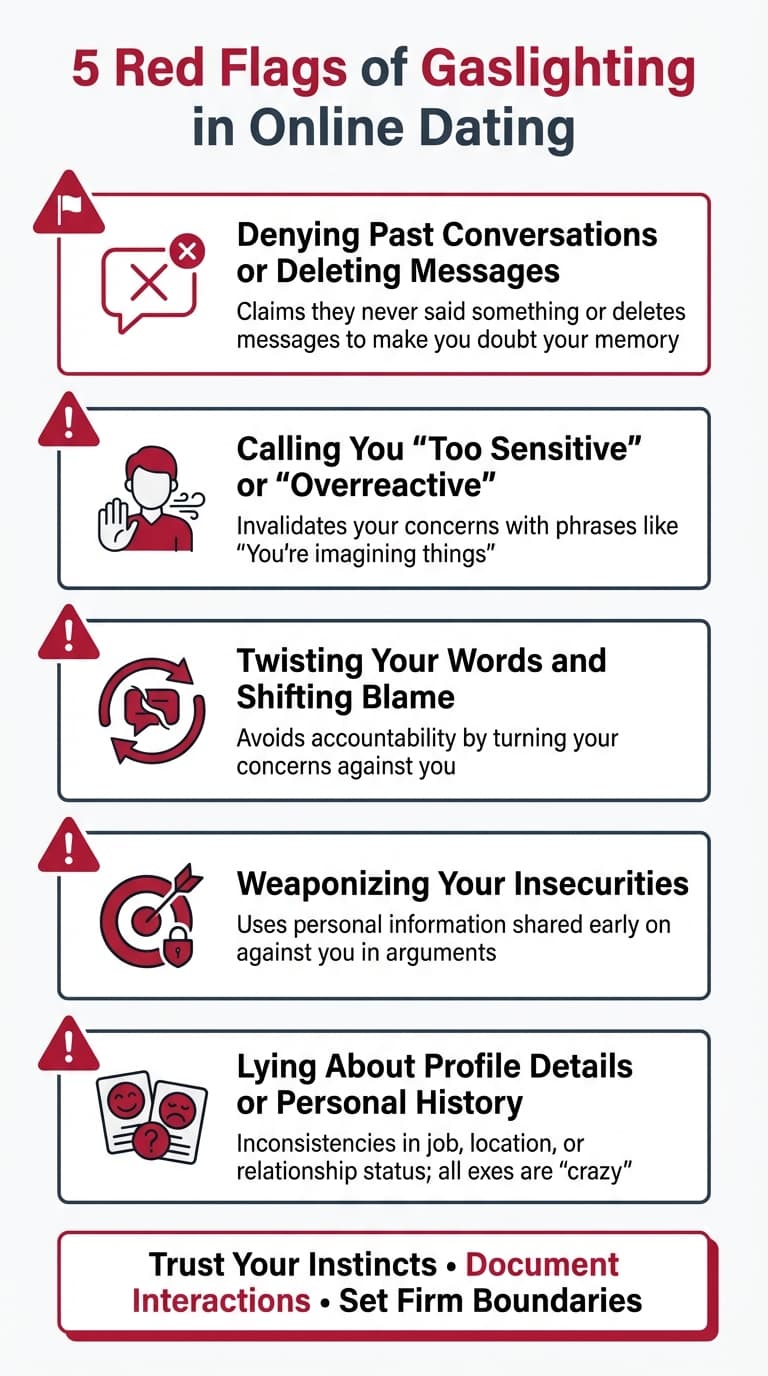
Gaslighting in online dating is a manipulative tactic designed to make you doubt your reality. It often involves subtle behaviors like denying past conversations, twisting your words, or exploiting insecurities. Recognizing these signs early is crucial to protecting yourself emotionally and mentally. Here’s what to look out for:
- Denying past messages or deleting conversations to make you question your memory.
- Calling you “too sensitive” or dismissing concerns to invalidate your feelings.
- Twisting your words and shifting blame to avoid accountability.
- Using your insecurities against you after gaining personal information.
- Lying about personal details or creating fake personas.
Gaslighters often use digital tools to manipulate evidence or control narratives. They might push to move conversations off dating apps, use fake profiles, or even engage in scams. Tools like Gaslighting Check can help detect manipulation patterns in chat logs and audio, empowering you to act before deeper harm occurs. Trust your instincts, document interactions, and set firm boundaries to safeguard yourself.
::: @figure
4 Ways to Spot an Online Gaslighter
Red Flags Checklist for Online Dating
Spotting red flags in online dating isn't just about protecting yourself - it's about recognizing subtle manipulation tactics that can distort your sense of reality. On dating apps, some individuals may use deliberate strategies to confuse or control you. Here are some key warning signs to watch for.
Denying Past Conversations or Deleting Messages
Manipulative individuals might claim they never said something or even delete messages to make you doubt your memory. This tactic isn't accidental - it’s intentional. As Keeley Teemsma, LCSW, MA, explains:
Gaslighting is not just lying... It involves repeated tactics that lead the target to question their memory, perception, emotions, or even sanity [7].
This behavior is designed to erode your confidence in your recollections and perceptions.
Calling You Too Sensitive or Overreactive
If someone dismisses your concerns with phrases like "You're too sensitive" or "You're imagining things", it’s a red flag. These comments are meant to invalidate your feelings. Dr. Chivonna Childs, a psychologist at Cleveland Clinic, explains:
Gaslighting is a form of emotional manipulation to make you feel as if your feelings aren't valid [6].
By shutting down your concerns, they gain control over the narrative and your emotions.
Twisting Your Words and Shifting Blame
Gaslighters often twist your words to avoid accountability. For example, if you bring up an issue, they might respond with, "You always twist things around." Michelle C. Brooten-Brooks, LMFT, points out:
A person who gaslights will shift blame to others in order to avoid responsibility [9].
This tactic can leave you doubting your own perspective and questioning your reactions.
Weaponizing Your Insecurities
Early in the dating process, gaslighters may ask probing questions about your fears, past traumas, or insecurities. While this might seem like an attempt to connect, they may later use this information against you during arguments, exploiting your vulnerabilities to undermine your confidence [5][3].
Lying About Profile Details or Personal History
Pay attention to inconsistencies in their job, location, relationship status, or personal history. If you bring up these discrepancies, they might react with anger or claim you’re misremembering. Another red flag? When they describe all their past partners as "crazy" or abusive, casting themselves as the victim [2][5]. If their online profile doesn’t match their behavior or stories, trust your instincts - it’s often a sign something isn’t right.
Digital Manipulation Tactics
The online world has given gaslighters a whole new set of tools to manipulate perceptions and rewrite reality. With platforms like dating apps and messaging services, they can twist facts, rewrite their narratives, and dodge accountability. Here's a closer look at some of the tactics they commonly use in digital spaces. Recognizing these behaviors is an important first step before diving into strategies to identify and counter them.
Fake Apologies Without Changed Behavior
Beware of apologies that sound more like deflections than genuine remorse. Phrases like, "I'm sorry if you felt that way", shift blame onto you rather than acknowledging any wrongdoing. As Michelle English points out, these insincere apologies are designed to protect the gaslighter's ego and rarely lead to real change. They often follow up with love-bombing - a flood of affection meant to distract you from ongoing problems [3]. Psychologist Boris Herzberg emphasizes:
gaslighters are more responsive to consequences and actions than words [1].
Changing Stories Across Conversations
Gaslighters are notorious for inconsistency. They might tell you they work in finance one day and then claim to be in tech the next. Details about their job, location, or personal history can shift from one conversation to another. These inconsistencies often come with excuses to avoid meeting in person [10]. If you call them out, they may lash out, accuse you of being paranoid, or insist you're misremembering. This behavior can escalate to "ghost-lighting" - where they vanish without explanation and reappear later, acting as though their absence never happened [12].
Using Digital Tools to Distort Evidence
Technology has made it easier than ever for gaslighters to manipulate evidence. For example, fewer than half of online daters can tell the difference between a real profile picture and one generated by AI [10]. This paves the way for fake personas. Another trend, known as "maskfishing", involves using heavy filters or deceptive camera angles in videos to create a drastically different appearance [4][10].
Gaslighters may also push for conversations to move off dating apps to less secure platforms like WhatsApp or Snapchat, where tracking and safety features are weaker [4][10]. They might even deny conversations ever happened, leaving you questioning your own memory [2][6]. Alarmingly, one in four online daters has reported being targeted by scams [10]. A common tactic includes "verification scams", where the gaslighter asks for two-factor authentication codes under the guise of confirming your identity - only to use them to take over your accounts [10].
These digital tactics underscore the importance of staying vigilant and using tools to identify manipulative behavior early on.
Detection Tools for Online Dating Conversations
When gaslighting clouds your judgment, objective tools like Gaslighting Check can help uncover manipulation patterns in online dating conversations without the influence of emotions. This tool is designed to spot signs of manipulation early, saving you from investing too much time or emotional energy. Here's how its features work to identify gaslighting behaviors.
Text Analysis for Chat Logs
This feature dives into your chat history, scanning for language patterns that may indicate manipulation. For instance, it flags phrases like "I never said that" when earlier messages prove otherwise or "you're being too sensitive" in response to valid concerns. By analyzing these linguistic cues, it highlights instances of denial, dismissal, or invalidation. The best part? This text analysis tool is available even on the free plan, making it a great starting point if you notice potential red flags in your conversations.
Voice Analysis for Tone Detection
Sometimes, manipulation isn't just in the words but in the tone. The voice analysis feature picks up on tonal shifts, such as sudden warmth, subtle condescension, or hidden aggression, that might signal emotional manipulation. This tool requires the Premium Plan, priced at $9.99/month, and comes with real-time audio recording capabilities. This means you can capture and analyze conversations as they happen, providing instant insights into the dynamics of your interactions.
Tracking Patterns Over Time
While isolated incidents might seem harmless, patterns often reveal the bigger picture. Recognizing recurring red flags in your online dating conversations can confirm early suspicions. For example, tracking helps distinguish between a one-time slip - like nerves on a first date - and consistent manipulative behavior. Gaslighting Check offers a conversation history tracking feature that logs and analyzes repeated behaviors, showing how tactics may evolve over time.
Psychologist Robin Stern highlights the importance of this approach:
Sorting out the truth from the distortion can be a helpful step in turning off the gas. Pay close attention to what your gaslighter says and how the conversation flows [11].
This feature, available with the Premium Plan, helps identify patterns like love-bombing followed by devaluation before they cause deeper harm. To ensure your privacy, the tool includes end-to-end encryption and automatic deletion. Experts also suggest using password-protected logs or apps with "panic delete" options if there's any risk of a manipulator discovering your records [7].
How to Protect Yourself
Once you're aware of the red flags, the next step is figuring out how to protect yourself. Taking proactive measures like documenting interactions, setting boundaries, and using tools for early detection can help you avoid or escape manipulative situations before they escalate.
Save Screenshots and Chat Logs
Digital evidence can disappear quickly - gaslighters often delete or change messages. The National Domestic Violence Hotline emphasizes:
evidence of technology-facilitated abuse is often fleeting and may be easily deleted [13].
To safeguard yourself, take screenshots as soon as something feels off. Store these securely on a password-protected drive, and consider sharing them with someone you trust, like a friend or family member. If you think your device might be compromised, use a public computer to gather and save evidence. Keeping a journal that includes dates, times, descriptions, and your reactions can also help you track patterns over time.
Set Clear Boundaries
Setting firm boundaries is one way to disrupt manipulation. For example, keep conversations on the dating app rather than quickly moving to platforms like WhatsApp or Snapchat. Dating apps often have built-in reporting tools and protections [14]. If someone pressures you to switch platforms, that could be a red flag.
Having prepared, assertive responses can also be helpful. Statements like, "We remember things differently, so I'm ending this conversation", can shut down attempts to manipulate you. Robin Stern, Ph.D., Co-founder of the Yale Center for Emotional Intelligence, explains:
As soon as you understand that it doesn't matter how right you are, the closer you will be to freedom [11].
Pay attention to how your match reacts to your communication style. If they get irritated when you don’t reply immediately or disappear only to return without explanation, these could be signs of controlling behavior.
Use Detection Tools Early
Spotting manipulation early can save you from emotional strain. Tools like Gaslighting Check are designed to identify patterns of manipulation before they cause deeper harm. Using these tools early - before emotions cloud your judgment - can provide valuable insights. Talkspace therapist Jill Daino, LCSW-R, advises:
Because gaslighting can cause such self-doubt and confusion, being able to step back and set boundaries, practice grounding techniques, talk with a trusted friend, and save evidence of interactions are all steps you can take [8].
Conclusion
Online dating can create fertile ground for gaslighting, largely due to the anonymity it provides. This anonymity makes it easier for some individuals to fabricate stories and exploit emotional vulnerabilities [3][5]. Being able to identify warning signs - such as denying previous conversations, twisting your words, or showering you with excessive affection - can help safeguard your emotional health.
Your instincts are your strongest ally in these situations. As Maya Angelou famously said:
When someone shows you who they are, believe them the first time [3][5].
Gaslighting isn’t a simple misstep or misunderstanding. It’s a calculated, ongoing pattern of manipulation aimed at undermining your confidence and sense of reality. The sooner you recognize these behaviors, the easier it becomes to step away and protect yourself from potential long-term effects like anxiety, depression, or PTSD symptoms.
FAQs
What are the signs of gaslighting in online dating conversations?
Gaslighting in online dating can show up in sneaky ways, often leaving you questioning your own emotions, memories, or sense of reality. Some telltale signs include someone denying past conversations, brushing off your feelings as "too sensitive", or twisting facts in a way that leaves you second-guessing yourself.
When chatting online, keep an eye out for red flags like inconsistent stories, reluctance to be upfront about who they are, or pushing you to reveal personal details too soon. If they use phrases that downplay your emotions or shift blame onto you, it’s a clear signal to pause and reassess. Spotting these behaviors early can help you set boundaries and step away if necessary.
How can I protect myself from gaslighting in online dating?
Protecting yourself from gaslighting in online dating begins with spotting the early warning signs. Pay attention to behaviors like twisting facts, dismissing your emotions, or shifting blame - these are common tactics used to manipulate. Keeping a record of conversations and noticing recurring patterns can help you catch these red flags early.
Online dating comes with its own set of warning signs. Be wary if someone avoids answering personal questions, refuses to meet in person, or pushes you to share private information. Trust your gut and establish clear boundaries to protect your emotional health.
You can also use tools designed to detect manipulation in conversations. And if something doesn’t sit right, don’t hesitate to talk it over with trusted friends or even a professional. Staying aware and taking proactive steps can go a long way in ensuring a safer online dating experience.
Are there tools that can help spot emotional manipulation in online dating conversations?
Platforms like Gaslighting Check are designed to spot signs of emotional manipulation in online dating conversations. These tools work by analyzing chats for manipulation tactics and often include features like real-time text and voice analysis, detailed reports, and conversation history tracking.
Using a tool like this can help you recognize potential red flags in your interactions, keeping you aware and more protected in the world of online dating.