How Gaslighting Impacts Workplace Trust

How Gaslighting Impacts Workplace Trust
Gaslighting at work erodes trust, leaving employees doubting their perceptions and decisions. It often involves subtle manipulation, like dismissing concerns or denying past statements, and thrives in environments with power imbalances or toxic dynamics.
Key effects include:
- Individual impact: Chronic stress, anxiety, and reduced confidence.
- Team impact: Poor communication, fear of speaking up, and higher turnover.
To address it:
- Recognize red flags like frequent denial of facts or dismissal of concerns.
- Document interactions and create a clear record.
- Organizations should validate reports, enforce accountability, and promote transparent communication.
Gaslighting Check, an AI tool ($9.99/month), helps detect manipulative language in real-time, offering privacy-focused solutions. Leaders must act decisively to rebuild trust and create a healthier workplace.
::: @figure
Combating Gaslighting: Building Trust and Innovation in the Workplace
How Gaslighting Destroys Workplace Trust
Gaslighting erodes both personal confidence and the trust that holds teams together. When employees can't trust their own instincts or rely on open, honest communication, the entire workplace dynamic starts to break down. The damage affects both individuals and the broader organization, creating ripple effects that can be hard to reverse.
Effects on Individual Employees
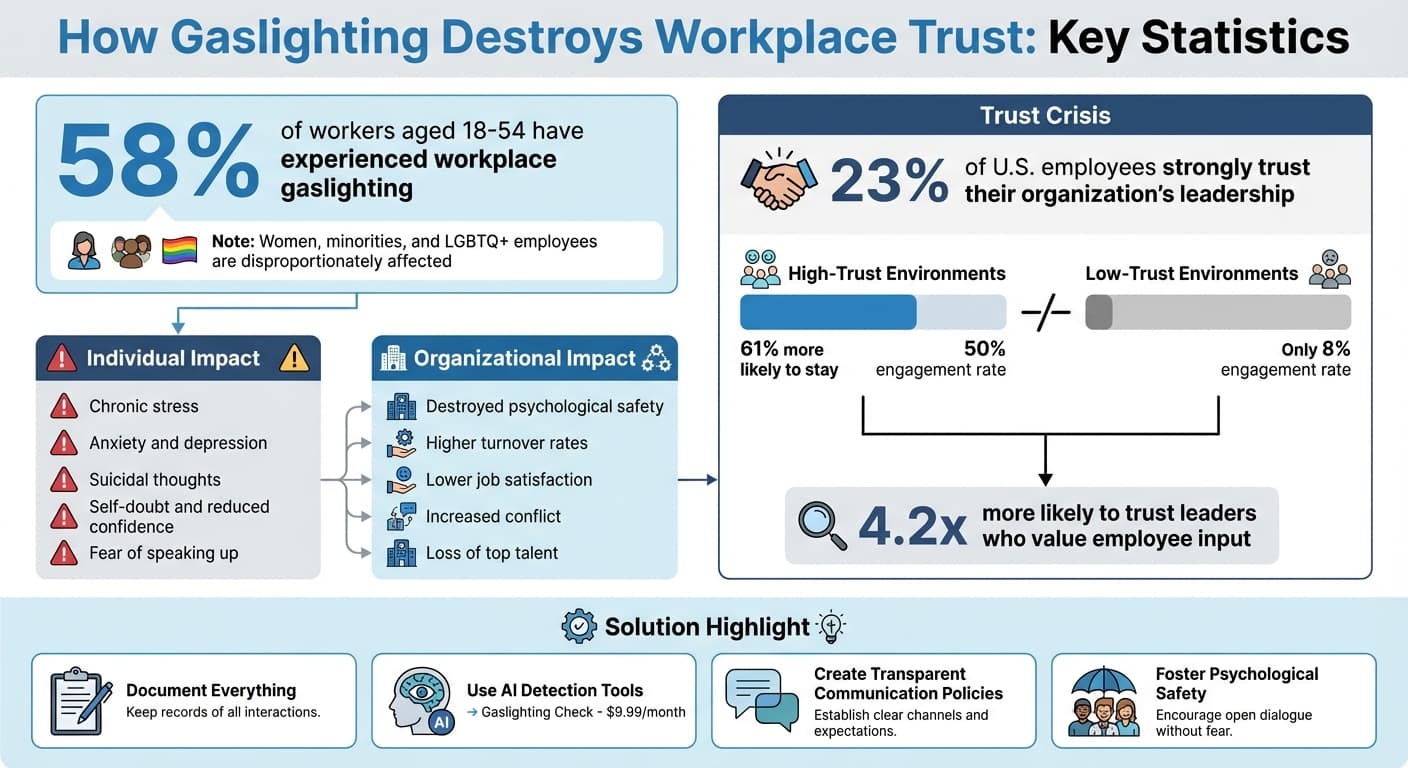
For employees subjected to gaslighting, the psychological toll can be overwhelming. Victims often experience chronic stress, anxiety, depression, and even suicidal thoughts [5]. This manipulation forces them into a state of cognitive dissonance, where they begin to doubt their own perceptions and reality [3].
"The person bolsters their own sense of self-confidence and self-esteem by undermining yours."
- Craig Malkin, PhD, Clinical Psychologist, Harvard Medical School [2]
This cycle of self-doubt chips away at professional confidence. Employees start second-guessing their decisions, shy away from sharing ideas, and may even stop reporting legitimate concerns. Over time, they feel isolated and incapable [3][1]. Women, minorities, and LGBTQ+ employees often face even harsher consequences due to existing power imbalances in workplace hierarchies [2]. These individual struggles inevitably affect team dynamics as well.
Effects on Teams and Organizations
Gaslighting doesn't just harm individuals - it poisons the entire team environment. It destroys psychological safety, the essential foundation that allows employees to voice opinions, admit mistakes, and collaborate effectively. In workplaces plagued by gaslighting, employees often become too afraid to speak up [5]. This silence fosters a toxic atmosphere filled with gossip, isolation, and "lonely only" experiences, where victims feel they have no allies [6].
The fear of retaliation stifles communication and teamwork, leading to lower job satisfaction, increased conflict, and ultimately, higher turnover rates [1]. As Mita Mallick, Head of DEI at Carta, puts it: "Allowing managers who continue to gaslight to thrive in your company will only drive good employees away" [7]. Companies that ignore gaslighting risk losing their top talent to competitors who prioritize healthier, more supportive work environments - a trend that’s only growing as employees become less willing to endure toxic behavior [6].
What Causes Gaslighting in the Workplace
To address gaslighting in the workplace, it’s essential to understand why it happens in the first place. At its core, gaslighting often stems from a mix of personal insecurities, power imbalances, and toxic workplace dynamics. These factors create an environment where manipulation thrives, eroding trust and morale.
Insecurity and Power Imbalances
Gaslighting thrives in environments where power dynamics are skewed. As Craig Malkin, a Clinical Psychologist at Harvard Medical School, points out:
"It requires a position of power to pull it off with impact and effectiveness."
Leaders who engage in gaslighting often use their authority to mask their own insecurities. By undermining others, they deflect attention away from their shortcomings. This behavior is frequently linked to traits like narcissism and a desire for dominance. Gaslighters seek control by invalidating others’ feelings and perceptions, creating a sense of doubt and confusion in their targets [1][4].
Mita Mallick, Head of Inclusion, Equity, and Impact at Carta, sheds light on this dynamic:
"Hurt people, hurt people. When you are deeply wounded, some people lash out in different ways... They could have been the target of gaslighting themselves and they are continuing to role model the only type of leadership they know."
The hierarchical nature of many workplaces enables gaslighters to exploit their positions. They may block promotions, restrict transfers, or isolate their targets by spreading harmful narratives. This behavior disproportionately affects individuals with less institutional power. Research highlights that 58% of workers aged 18 to 54 have experienced workplace gaslighting, with women, minorities, and LGBTQ+ employees being particularly vulnerable [2].
Toxic Workplace Cultures
A toxic workplace culture can amplify gaslighting behaviors, even among employees who might not typically resort to manipulation. In highly competitive environments - such as law firms or financial institutions - employees may feel pressured to undermine colleagues to get ahead [2]. Chronic burnout also creates fertile ground for manipulative tactics [2].
Ambiguity in roles and responsibilities adds another layer of stress, making it easier for negative behaviors to take root. In workplaces where incivility is tolerated and psychological safety is absent, employees may feel too intimidated to speak up. This silence allows gaslighting to persist unchecked, further entrenching the toxic culture [3][5].
Detect Manipulation in Conversations
Use AI-powered tools to analyze text and audio for gaslighting and manipulation patterns. Gain clarity, actionable insights, and support to navigate challenging relationships.
Start Analyzing NowSolutions: Addressing Gaslighting and Rebuilding Trust
Once you’ve identified the causes of gaslighting, it's time to take action. Restoring trust requires both personal awareness and a firm commitment from organizations.
How to Recognize Gaslighting
Gaslighting often leaves you second-guessing your memory or abilities after certain interactions. If someone regularly denies past statements or dismisses your concerns with phrases like "You're too sensitive" or "You're overreacting", it’s a red flag. These tactics are designed to make you doubt your own perspective.
Keep detailed records. Note down interactions with dates, exact quotes, and the names of any witnesses. Follow up verbally agreed points with emails that summarize the discussion, such as, "To confirm my understanding, we agreed on X." This creates a clear paper trail. When possible, avoid one-on-one meetings with suspected gaslighters - bring a trusted colleague as a witness. Pay attention to signs like persistent anxiety, diminished confidence, or feeling constantly on edge around certain individuals. These could be your instincts signaling manipulation.
While self-awareness is key, technology can also help you identify patterns of gaslighting.
Using Gaslighting Check to Detect Manipulation

Detailed documentation sets the stage for using tech tools to confirm suspicions. Platforms like Gaslighting Check utilize AI to analyze workplace interactions. Features include real-time audio recording during meetings or calls, along with text and voice analysis that evaluates not just the words spoken but also tone and stress indicators.
The tool generates reports highlighting manipulative language, making it easier to spot what might otherwise go unnoticed. For $9.99/month, the Premium Plan includes conversation history tracking, which can reveal patterns over time. To protect your privacy, all data is secured with end-to-end encryption and has automatic deletion policies. For organizations facing broader challenges, the Enterprise Plan offers custom solutions and pricing tailored to their needs.
Creating a Trust-Based Work Environment
Addressing gaslighting effectively requires more than individual vigilance - it demands systemic change. Start by validating employee reports, as gaslighting thrives on making victims feel isolated. Research shows that acknowledgment from leadership is critical in helping victims regain their sense of reality [6]. When complaints arise, conduct swift and impartial investigations, and take visible disciplinary action against perpetrators to demonstrate zero tolerance for such behavior [8].
Introduce transparent communication policies requiring all verbal agreements and meeting outcomes to be documented in written follow-ups, reducing the risk of "he-said-she-said" disputes [5][2]. If a manager is involved in gaslighting, offer resources to help victims transfer to other teams without fear of retaliation or career setbacks [6]. Foster psychological safety by creating an environment where employees feel secure sharing ideas or admitting mistakes without fear of judgment. Provide access to mental health resources, such as Employee Assistance Programs (EAPs) or on-site counselors, to help victims manage the emotional toll of gaslighting [8].
Organizations should also offer targeted training to clearly define gaslighting behaviors, addressing the ambiguity that often allows manipulation to persist [8]. Managers should challenge vague or unsubstantiated claims made by others, particularly gossip or negative comments about employees, by asking for specific evidence. This shifts the burden of proof onto the gaslighter, helping to dismantle their tactics [6].
Conclusion: Building Trust to Stop Gaslighting
Gaslighting chips away at workplace trust, harming both productivity and employee engagement. To put this into perspective, only 23% of U.S. employees report strong trust in their organization's leadership. Yet, in environments where trust thrives, employees are 61% more likely to stay, and engagement rates soar to 50%, compared to just 8% in low-trust settings [9].
"If you want to keep your great talent, you will absolutely put an end to any gaslighting that's happening in your organization." - Mita Mallick, Head of Inclusion, Equity, and Impact, Carta [6]
This underscores the need for meaningful action. Rebuilding trust starts with listening to employees who report gaslighting and addressing the issue promptly. Holding those responsible accountable is non-negotiable [6]. Leaders must also prioritize transparency in their communication and decision-making processes, leaving less room for manipulation [9].
To tackle gaslighting head-on, consider using tools like Gaslighting Check, which offers real-time audio analysis and detailed reports for $9.99/month, with end-to-end encryption ensuring user privacy. Beyond tools, organizations must create a culture of accountability and foster open communication. When leaders truly value employee input, workers are 4.2 times more likely to trust them [9].
Ultimately, trust is the antidote to gaslighting. By focusing on trust, organizations can eliminate the harmful effects of gaslighting and build a healthier, more engaging workplace.
FAQs
What are the signs of gaslighting in the workplace, and how can employees address it?
Gaslighting in the workplace often reveals itself through distinct patterns of behavior. Employees might find themselves grappling with persistent self-doubt, especially after conversations that leave them questioning their memory or understanding of events. Other red flags include having their concerns brushed aside, being left out of key discussions, or facing blame-shifting tactics that twist the truth.
Spotting these behaviors early is crucial because gaslighting can erode emotional well-being, shatter confidence, and undermine trust within a team. Tools like conversation analysis platforms can play a role in identifying manipulation by examining communication patterns and offering unbiased insights. Addressing these issues swiftly can help create a work environment built on trust and mutual respect.
How can organizations address and prevent gaslighting in the workplace?
Organizations can take practical steps to address gaslighting and build trust in the workplace. One effective approach is offering training programs that teach employees and managers to identify gaslighting behaviors. These might include denying events, shifting blame, or dismissing legitimate concerns. Recognizing these patterns is the first step toward addressing them.
Another critical step is implementing confidential reporting systems. Clear processes that allow employees to report manipulative behavior without fear of retaliation encourage openness and foster a supportive environment. When people feel safe speaking up, it strengthens workplace transparency.
Organizations can also benefit from tools designed to spot manipulative communication patterns early. Combining education, clear accountability measures, and proactive monitoring creates a workplace where trust and collaboration can truly flourish.
How does gaslighting affect trust and teamwork in the workplace?
Gaslighting in the workplace can wreak havoc on trust and teamwork by sowing confusion, self-doubt, and emotional strain among employees. When someone experiences gaslighting, they may start to doubt their own judgment and memories, which can chip away at their confidence and disrupt open communication. As a result, collaboration becomes strained, and the team’s unity begins to falter.
Beyond that, gaslighting often breeds a toxic atmosphere filled with blame-shifting and manipulation, eroding mutual respect among colleagues. Over time, this kind of environment damages trust, drags down morale, and hampers productivity, as employees shift their focus from collaboration to simply protecting themselves. Tackling gaslighting head-on is crucial to fostering a workplace where trust, support, and teamwork can thrive.